russia

Geopolitics

Iran after nearly six months of war

Nearly six months after the opening of joint United States–Israeli operations against Iran, the central strategic question is no longer whether the Islamic Republic has been militarily weakened, because on every conventional indicator it has been, nor whether the United States and Israel possess the capacity to inflict additional destruction, because they clearly do. The problem is instead whether the destruction already imposed, and that which can still be imposed, is capable of producing a political termination corresponding to the military balance, or whether the conflict has entered a different phase in which continued instability may itself acquire strategic utility for some of the actors involved, even though none of them necessarily entered the war intending to create a permanently destabilised Middle East
Geopolitics

Putin, la finitezza del potere e la questione della successione russa

Vladimir Putin ha settantatré anni e governa direttamente o indirettamente la Federazione Russa dal 1999; l’ordinamento costituzionale gli permetterebbe ancora di concorrere nel 2030 e, qualora fosse rieletto, di rimanere al Cremlino fino al 2036, quando avrebbe ottantatré anni, ma proprio questa possibilità teorica rende oggi la questione biologica inseparabile da quella politica, perché una prospettiva di governo che si estende per un altro decennio presuppone non soltanto l’esistenza di un meccanismo costituzionale che la renda possibile, bensì la convinzione, da parte dell’élite e dello stesso Presidente, che la capacità personale di esercitare quella funzione possa effettivamente prolungarsi per un periodo così lungo.

Geopolitics

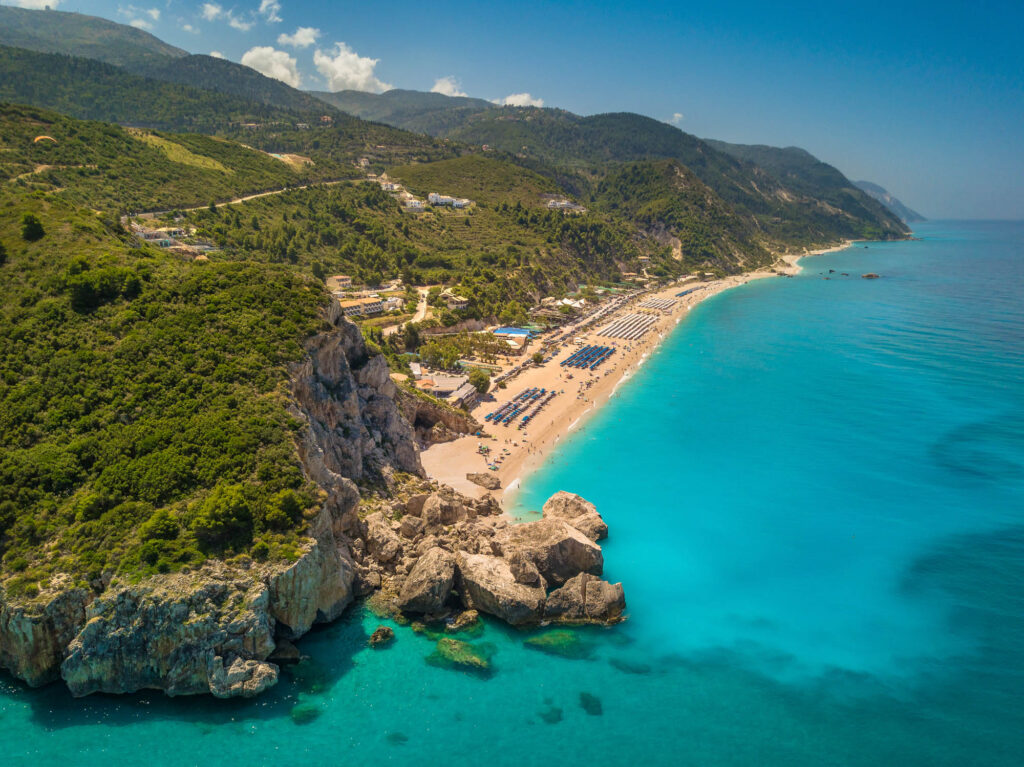
The Lefkada incident

The central technical finding or our analysis is that the Lefkada incident should not be modelled as a Ukrainian naval drone that suffered a generic malfunction in the Black Sea and, as a consequence of that malfunction, somehow travelled accidentally into the Ionian Sea, because the combination of platform range, route geometry, Turkish-Straits navigation, the later Greek forensic reporting and the wording of Athens’ diplomatic protest makes that interpretation extremely difficult to sustain; the substantially more coherent reconstruction is that the craft had already been deliberately deployed into the Mediterranean, probably for an operation against Russian or Russia-associated maritime traffic, after which a comparatively ordinary local failure in the command-and-control chain — with Greek reporting identifying water ingress into the electronics as the probable initiating cause — deprived its operator of control and allowed the USV to enter Greek waters and eventually become trapped near Lefkada. Reuters reported on 15 May that Greek investigators believed the craft had lost orientation because of a technical malfunction and were examining metadata, fuel state and a possible launch from shore or a mother ship, while later Greek reporting based on the completed Hellenic defence investigation identified the platform as a Mamai and placed its preceding trajectory in the maritime area south of Italy, relatively close to Sicily

Scroll to Top