Geopolitics

all geopolitical essays and articles.

Geopolitics

The Lefkada incident

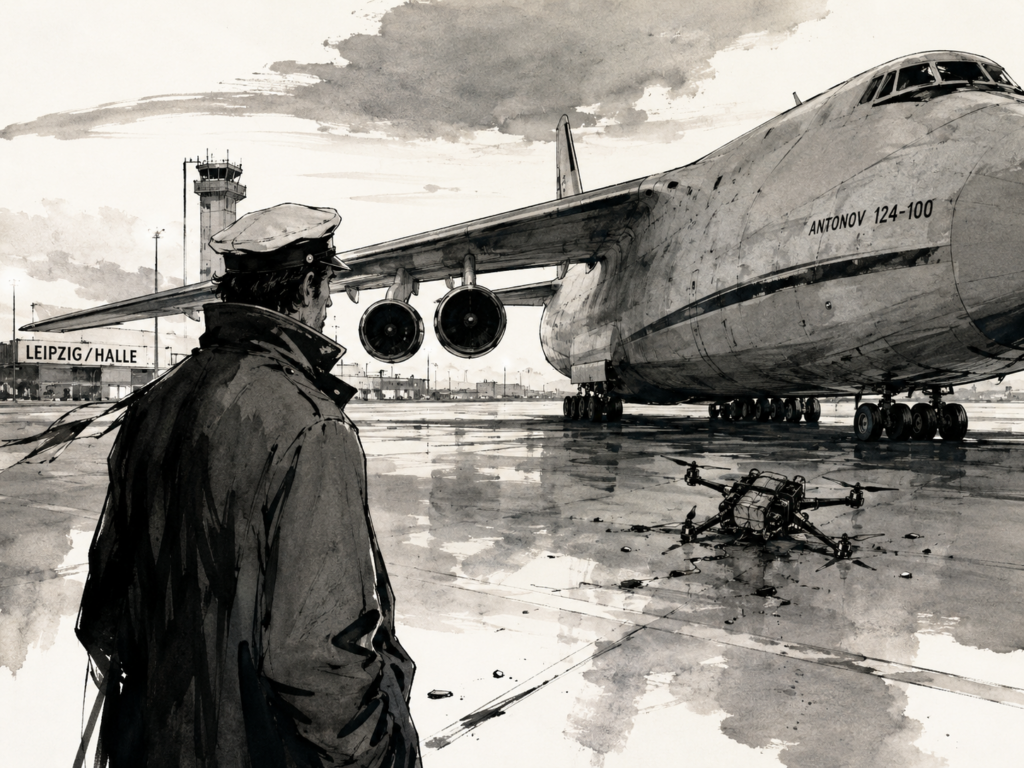
The central technical finding or our analysis is that the Lefkada incident should not be modelled as a Ukrainian naval drone that suffered a generic malfunction in the Black Sea and, as a consequence of that malfunction, somehow travelled accidentally into the Ionian Sea, because the combination of platform range, route geometry, Turkish-Straits navigation, the later Greek forensic reporting and the wording of Athens’ diplomatic protest makes that interpretation extremely difficult to sustain; the substantially more coherent reconstruction is that the craft had already been deliberately deployed into the Mediterranean, probably for an operation against Russian or Russia-associated maritime traffic, after which a comparatively ordinary local failure in the command-and-control chain — with Greek reporting identifying water ingress into the electronics as the probable initiating cause — deprived its operator of control and allowed the USV to enter Greek waters and eventually become trapped near Lefkada. Reuters reported on 15 May that Greek investigators believed the craft had lost orientation because of a technical malfunction and were examining metadata, fuel state and a possible launch from shore or a mother ship, while later Greek reporting based on the completed Hellenic defence investigation identified the platform as a Mamai and placed its preceding trajectory in the maritime area south of Italy, relatively close to Sicily

Geopolitics

Asia atomica

Deterrenza, fragilità strutturale e rischio di escalation nel nuovo sistema nucleare asiatico

Dai primi anni Duemila il sistema strategico asiatico ha progressivamente cessato di essere una semplice somma di confronti bilaterali. Nel 2026 esso costituisce ormai un sistema di deterrenza concatenata, nel quale una modifica della postura strategica di un attore produce conseguenze sulla pianificazione di almeno due o tre altri attori.

Geopolitics, Other Researches

Storia (plausibile) d’Italia

Il Bel Paese dal Lodo Moro ad oggi: una possibile interpretazione del percorso italiano dagli anni Settanta ai giorni nostri. Una chiave di lettura fra le tante, fondata sui dati peraltro parziali, quindi consapevole dei limiti di ogni analisi storica condotta su un periodo recente e non finito.

Economics, Geopolitics

Scenari mediterranei

In un’epoca definita da instabilità strutturale e da disordini multidimensionali, la categoria di permacrisi si impone come paradigma interpretativo essenziale per comprendere le trasformazioni del sistema internazionale. Essa designa una condizione di crisi permanente e multivettoriale, in cui ogni soluzione genera nuove contraddizioni e nessuna stabilità può dirsi definitiva. Nel contesto mediterraneo – crocevia di civiltà e di tensioni – questa condizione assume una dimensione amplificata, poiché le eredità storiche si intrecciano con le pressioni contemporanee, producendo dinamiche non lineari e talvolta caotiche (World Economic Forum, 2023

Geopolitics, Researches on Human Behaviour

Intervista per l’uscita del libro “The becoming of the Iranian Revolution”

The Iranian Revolution is usually remembered as an Iranian event. This book treats it as a world-historical threshold: the moment when Islam was converted from a social and moral substrate into a sovereign grammar of power, capable of capturing a modern state and projecting influence far beyond borders. It explains how the Islamic Republic engineered “sacred statecraft” into institutions—constitutional authority, coercive architecture, welfare brokerage, and mobilisation narratives—so that endurance, sacrifice, and time could be turned into strategic assets rather than political liabilities.

The book then follows the diffusion of that proof-of-concept across the wider Muslim world. It shows why Iran’s model both energised and fractured political Islam: even where Shi‘ite doctrine was rejected, the operational repertoire—parallel security organs, proxy warfare, resistance economies, welfare ecosystems, and narrative discipline—became imitable. At the same time, rivals developed their own “state Islams”, producing a competitive landscape in which legitimacy is administered through ministries, clerical bodies, education pipelines, media control, and selective enforcement.

The central argument is that Islam remains geopolitically powerful, but that its power is changing form. Iran’s revolutionary model no longer dominates meaning as it once did, because the costs of monopoly have risen: urbanisation, mass education, and digital mediation have multiplied publics, interpretations, and moral vocabularies, making authority increasingly reputational and contested. Where the Islamic Republic can still compel, it struggles more to bind—an internal transformation with external consequences.

From this shift emerges the book’s core synthesis: “Islam as geopolitical power” is becoming less a single universal project and more a set of mechanisms that recur across theatres. It appears as state legitimacy infrastructure; as transnational cultural-moral mobilisation around specific causes; as networked proxy and welfare systems that convert asymmetry into resilience; and as an enduring identity field in diaspora arenas that interacts with Western politics, securitisation, and social cohesion. The outcome is not the retreat of religion from geopolitics, but a new geopolitics of Islam defined by competition—between states, movements, and moral grammars—where power depends on who can still transform religious capital into obedience, endurance, funding, and force.

Written in a documented, analytical style, the book offers an integrated framework for understanding how 1979 reshaped global politics, why Iran is changing from within, and how the world is entering an era of “competitive Islams” in which the sacred remains potent, but cannot be monopolised.
https://a.co/d/0beHww7u

Scroll to Top